Mae Jemison: Astronaut, Doctor, Icon

Astronomy and Physics, Earth, News, women in science

In September 1992, the Space Shuttle Endeavor rocketed into space with astronauts and science experiments. This was a routine launch, containing a healthy mix of new and experienced astronauts. One astronaut, however, was making history. That day, Dr. Mae Jemison, serving as mission specialist 4, became the first African American woman in space.

Jemison was born in 1956 in Alabama but moved to Chicago at a young age. As a child, she was inspired by Star Trek’s Lieutenant Uhura. This, along with her parent’s encouragement, fueled her love for science and space. In addition to being remarkably bright, Mae Jemison was also a skilled dancer. 

At 16, Jemison entered Stanford University and earned degrees in Chemical Engineering and African American Studies, despite the fact she faced frequent racial discrimination from her professors. After graduation, she faced a tough decision: medicine or dance. Jemison chose to attend Cornell University and earned her Doctorate in Medicine. While in school, she worked at a Cambodian refugee camp and with Flying Doctors in East African . Later, she worked with the Peace Corps and the Center for Disease Control. 

Left: Mae Jemison’s astronaut portrait. Right: Jemison in space. Source: NASA

Inspired by other female astronauts such as Sally Ride, Dr. Mae Jemison applied to the prestigious astronaut program and was selected in the first group following the Challenger disaster. She flew to space on mission STS-47. Jemison conducted experiments focused mainly on life sciences, including one that involved observing tadpoles in zero-gravity.

Don’t let anyone rob you of your imagination, your creativity, or your curiosity. It’s your place in the world; it’s your life. Go on and do all you can with it, and make it the life you want to live.

Mae Jemison

A couple months after returning to Earth, Jemison resigned from NASA and returned to the medical field. She served on the World Sickle Cell Foundation’s board of directors. She founded the Jemison Group Inc. and a the Dorothy Jemison Foundation, named for her mother, which runs a science camp for children.

Jemison later worked as a professor of environmental studies at Stanford and as one of Cornell’s Professors-at-Large. She is an advocate for science education, especially among minority children. She then founded BioSentient Corp, which works with research she conducted aboard the Endeavor.

Mae Jemison in 2018. Photo by Andy Kropa/Invision/AP

In 2001, she wrote a memoir for children about her life titled Where the Wind Goes, which gives an glimpse into her time as a female student of color. In addition, she wrote multiple children’s books. The Dorothy Jemison Foundation won a prestigious award along with 500 thousand dollars. She also appeared on Star Trek: The Next Generation (season six episode 24 if you’re interested) and was the first real astronaut to do so. 

The point is, Dr. Mae Jemison is an incredibly accomplished woman. She does anything she set her mind to. She is so much more than the 190 hours, 30 minutes, and 23 seconds she spent in space. She is a doctor, an advocate, and an author, and I am personally inspired by her perseverance, strength, and intelligence.


To read about more women in science, check out the links below:


The Universe in Your Hands Book Review

Astronomy and Physics, book reviews, News

One thing about astronomy that has always overwhelmed me is its complication. It seems like you need a degree to understand even the simplest literature. Luckily, there are more books about astronomy than ever before, and you need to know less than ever to understand them!

One of my favorite astronomy books is The Universe in Your Hand by Christophe Galfard. This book boasts its use of only a single equation: E=mc^2. There is no math involved. It is purely conceptual, written simply enough for anyone to understand. This book is not for physicists, which is ideal because I (along with many others) am not a physicist. It is the perfect book for the casual astronomy enthusiast as well as the young astrophysicist-to-be.

I love this book because it has calm energy. The book opens with you, the reader, on a beach looking at the stars. The scene exudes peace and relaxation. There is nothing like learning a difficult concept by having it whispered calmly in your ear. Galfard carries this serene energy throughout the entire book.

The Universe in Your Hand is written in second person, with the author referring to the reader as you almost constantly throughout the book. I realize that some people will be skeptical of this, but trust me, Galfard makes it work. You are making the discoveries that answer the questions of the universe. The reader realizes what is happening around them, then Galfard explains it. The reader feels like a part of the experience and is invested in the text.

The book covers everything: string theory, black holes, quantum particles, photons, the life cycle of a star, and so much more. It’s the perfect glimpse into physics without confusing formulas.

I would recommend this book to anyone who is interested in astronomy or astrophysics. Many of my physics friends have borrowed and enjoyed my copy of The Universe in Your Hand. It is perfect for anyone who wants to read about physics but often finds themselves confused by the difficult math involved. You do not need a background in physics to understand this book. If you want to dip your toe into physics, this book is for you. If you are intimidated by the complexity of physics, this book is for you. If you are interested in a lighthearted scientific read, this book is for you.

My point is that this book is for anyone. It’s one of the most accessible scientific texts I’ve ever read. Don’t fear physics, just read The Universe in Your Hand


Nancy Grace Roman: the Mother of Hubble

Astronomy and Physics, Earth, News, women in science

Dr. Nancy Grace Roman was interested in astronomy from the very beginning. Born in Tenessee in 1925, in elementary school Roman was a co-founder of an astronomy club. She went on to excel in a Baltimore high school and attended Swarthmore College to earn her bachelors degree in Astronomy. In 1949, she received her doctorate in astronomy from the University of Chicago.

Dr. Roman in 1962. Credit: NASA

Shortly after earning her Ph.D., Dr. Roman found a star with unusual emission spectra. This discovery helped her create a name for herself among astronomers.

She began her work teaching at the University of Chicago but left because she didn’t see a future for herself there. She believed that she would never receive tenure simply because she was a woman.

I’m happy about the fact that women can get senior jobs now. They’re not being quite as discouraged as I was.

Nancy Grace Roman

In 1959, Dr. Roman became NASA’s first chief of astronomy. She traveled across the country, speaking to astronomers and giving lectures. She spoke of the advantage of observing the stars from outer space: no light pollution, no clouds, and no atmosphere to block parts of the signal. Most importantly, however, she spoke about and lobbied for the Hubble Space Telescope.

Dr. Roman spoke to secure funding for the project. She pushed for designs to be drawn. Her work has earned her the title “the Mother of Hubble.” And yet, very few people have heard of her.

It wouldn’t be until 1990, after her retirement, that she would see her efforts launched into orbit. 

Nancy Grace Roman, later in life. Source: NASA

Dr. Nancy Grace Roman died in 2018 at the age of 93. A fantastic scientist, inspirational woman, and passionate person, her legacy lives on in our beloved Hubble Space Telescope.

Dr. Roman did everything she could to help the Hubble Space Telescope project. Who knows where it would have gone without her? But Dr. Roman is largely forgotten. Time is washing her memory into oblivion. We must keep Dr. Roman and every other influential woman in history alive. I, among others, must write about her. You must talk about her. We must remember her.


To read about more women in science, check out the links below:


Feeling Like a Fraud

News, psychology

Let’s suppose that you often feel inadequate. That you know you’re not good enough. Every day you fear being “found out.” You worry that everyone will discover that you suck. Maybe you’re perfectly qualified for the job. In fact, you probably are. And yet, you worry because you think that everyone will be disappointed. 

What I’ve just described is called impostor syndrome. Millions of Americans suffer from it every year. But what is impostor syndrome? Who does it affect? And how can it be stopped?

To begin, psychologist Audrey Ervin told Time that impostor syndrome is characterized by an inability to “internalize and own [one’s] successes.” People experiencing impostor syndrome often feel that their successes are based solely on luck and not on their skill. Impostor syndrome is a misleading term as it is not actually a disorder. A person cannot be diagnosed with impostor syndrome; it is simply a phrase used to describe the way we feel.

For example, after studying for hours for a physics test, I felt that my A+ grade was a result of chance. I felt lucky I knew how to answer the questions on the test, and I believed that another set of questions would have resulted in a failing grade. This is classic impostor syndrome.

In addition to being unable to own their success, people experiencing impostor syndrome often fear being exposed as a fraud. They imagine a day in which every one will realize that they’re not smart/creative/good enough. This fear is incredibly draining. Impostor syndrome commonly leads to low self-esteem, anxiety, and depression. This, in turn, feeds the impostor-like feelings.

One common misconception about impostor syndrome is that it primarily affects women. Research shows that it affects women and men equally. The impact of impostor syndrome is more widespread than many realize. Studies found that 70 percent of people will experience it at least once in their lives. It affects just about everyone: men and women, CEOs and interns, the rich and the poor, the old and the young.

I spoke to Emma Krofcheck, a Physics and Astronomy student at the University of Pittsburgh, about her experience with impostor syndrome. Coming into college, she believed that she wouldn’t be as smart as the other students in her classes. Many people tried to tell her otherwise, but impostor syndrome made it difficult to believe them. She told me that the biggest impact of imposter syndrome is that it makes her doubt her future. She finds it difficult to believe that she could have a successful career in academia. Krofcheck landed a research position with one of her professors after an exceptional performance in that professor’s class. Even still, she said she often doubts if she should be there. Impostor syndrome tells her that she isn’t as smart as the other undergraduate researchers when this is clearly not the case.

I also spoke to Zachary Lewis, another Pitt Physics and Astronomy student. Lewis said other students fuel his feelings of inadequacy. Many students entering the STEM (Science, Technology, Engineering, and Mathematics) are extremely bright, and they know it. They brag to fellow students and constantly try to prove they are the top of their class. This behavior brings insecure, more humble students down. Furthermore, Lewis told me he is a perfectionist, which fuels his impostor syndrome.

Impostor syndrome is commonly seen in perfectionists, people afraid to appear stupid, and people who are naturally fast learners. This is, of course, not a comprehensive list of all the patterns found by researchers.

If you or someone you know is suffering from impostor syndrome or similar feelings, there a couple of different things you can do. First, you can see a therapist. These trained professionals can help you overcome insecurities. Another thing you can do is look for evidence that you are not a fraud. Krofcheck told me the most helpful thing for her is citing specific times when she led to her own success. Pointing this out to yourself or a friend could show you that these feelings of inadequacy are untrue. Remind yourself that you are smart, you are capable, and you deserve to be here. Lewis said, “you’re going to end up where you deserve to be,” emphasizing that you wouldn’t be placed in a role unless you were capable of it.

It’s important to ask for help if you can. Many friends and family members are perfectly willing to help lift you up. If you think that you are suffering from impostor syndrome, remember your successes. They can’t all be from luck. You are capable of anything. Don’t let impostor syndrome tell you otherwise.


If you ever need help, you can text a crisis line. Text HOME to 741741. You can text this crisis line for any reason at any time of any day. Do not wait for an emergency, prevent one.


July Sky Spotlight

Astronomy and Physics, Earth, News

2nd – New Moon, Total Solar Eclipse

July will start off as strong as June did! On only the second day of the month, we will have a total solar eclipse. Most of South America will be able to see at least a partial eclipse. Check Time and Date to see if you’re in the path!

3rd – Moon with Mars and Mercury

Astronomers call the sliver after a new moon a young moon. July’s young moon will be hanging out with Mars and Mercury in the constellation Cancer.

4th – Earth at Aphelion

The Earth’s orbit around the Sun is not a perfect circle, it’s an ellipse. This means that at some point, it must be at it’s furthest point from the Sun. That is in July! Aphelion is when a planet is farthest from it’s sun. This won’t affect our life at all, it’s just a neat fact.

9th – First Quarter, Saturn at Opposition

On July 9th, the Moon will be in it’s first quarter phase. This means that the left half will be dark and the right half will be light.

In addition, Saturn will be at opposition. This means that Earth will be directly between Saturn and the Sun.

13th – Moon with Jupiter

Jupiter and the Moon will be together in the constellation Scorpius in the Southern sky.

15th – Moon with Saturn

Saturn will be just East of the nearly full moon. They will be together in the constellation Sagittarius in the Southern Sky.

16th – Full Moon, Partial Lunar Eclipse

Most of the world (not including North America) will be able to see the Partial Lunar Eclipse! Check Time and Date to see if you’re in the path. If, like me, you are not in the path, enjoy the bright, beautiful full moon.

20th – Moon with Neptune

The Moon will be with Neptune in the constellation Aquarius in the Eastern night sky.

24th – Last Quarter, Moon and Uranus

On the 24th, the Moon will be in it’s last quarter with Uranus. They will be in Aries.

28th – Southern Delta Aquariid Meteor Shower Peaks

From midnight to dawn, and especially at 2 a.m., we will be able to see meteors originating from Aquarius. The moon will be a dark crescent, so the meteors will be easier to see. It is more visible from the Southern hemisphere than from the Northern Hemisphere.

31st – New Moon

Finally, on the last day of the month, we will end the same way we began: with a new moon.

Happy July viewing!


Easy Ways to be Eco-Friendly

environment, News

In today’s society, everyone is looking for ways to be more environmentally friendly. Unfortunately, it’s not easy. Nearly every company uses plastic in their products and those that don’t often sell for exorbitant prices. So what can we, the average consumer, do to help the Earth?

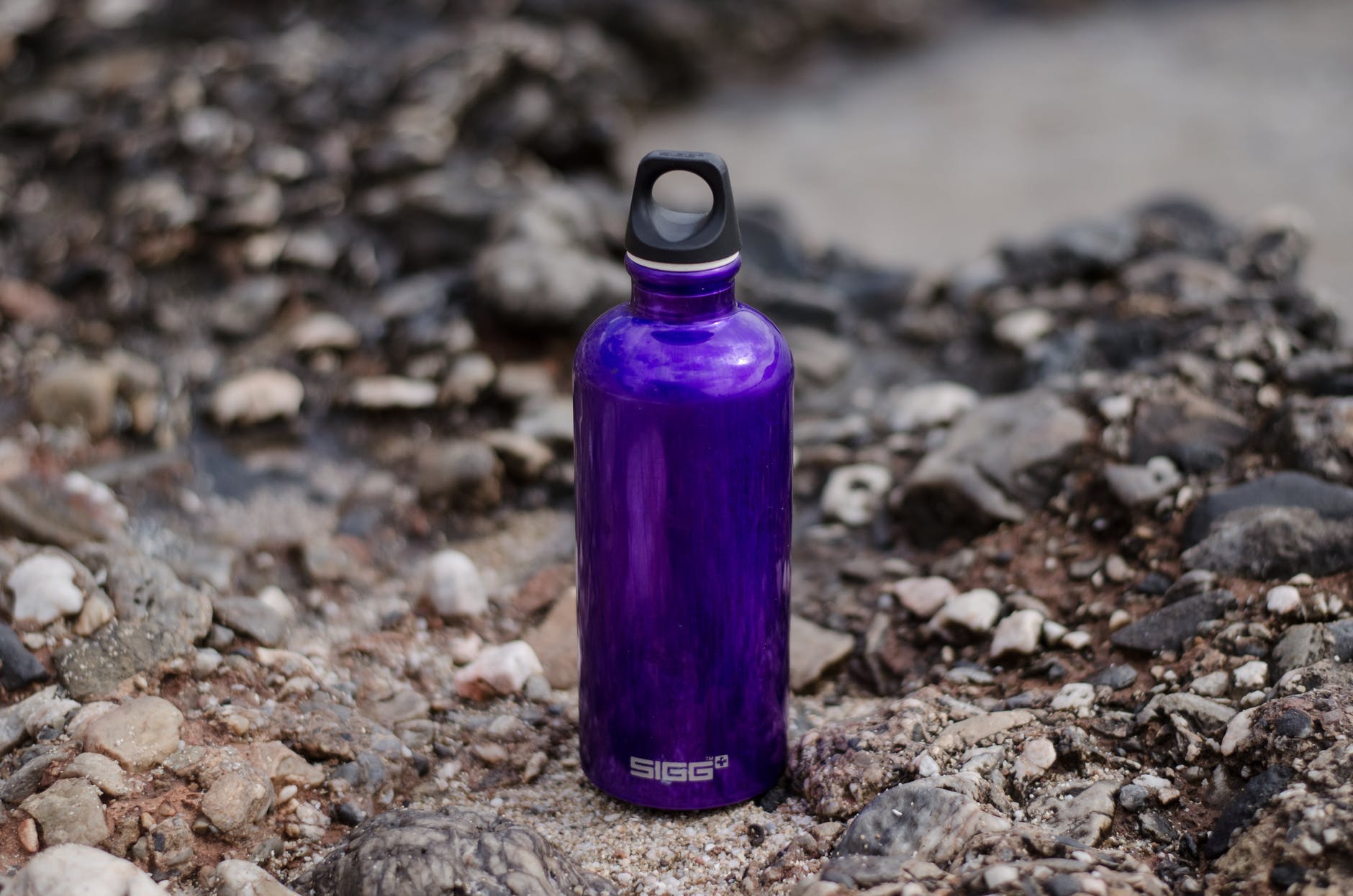
One easy way to help the Earth is to reduce your use of single-use plastics. Water bottles, Ziploc bags, and to-go cups are very convenient in our lives. We use them so often without even batting an eye. An easy place to start is looking for ways to cut these out. I carry around a reusable water bottle. There are tons of these out there, and they can fit almost any need. Some are filtered, some have places for fruit to be diffused into the water, and some have re-freezable ice sticks in the middle. They come in different sizes and at many different price points, so it should be easy to find one to fit your needs. 

Another simple thing I do to help the Earth is put my lunch in Tupperware. Instead of putting my sandwich in Ziploc bags, I use sandwich sized containers. These are washable, reusable, and easily reduce plastic. A set of these containers can be cheaper than Ziploc bags, and they will last you infinitely longer. 

These photos come from the public domain. Found on Pexels.

Furthermore, if you drink coffee, use a travel mug. You can make your coffee at home, or have them filled up at a coffee shop. At Starbucks, you get a 10 cent discount if you bring your own cup, and at my university, a refill (on any cup size) only costs 99 cents. These discounts will add up over time. Starbucks produces 6 billion plastic cups every year. By using travel mugs, a  single person can help lower that number. 

There are lots of other single-use products that can be replaced with a reusable counterpart. We can use wool dryer balls instead of dryer sheets (I use these). We can use reusable makeup pads instead of cotton pads (I use these). These pads work better for me than cotton pads and eye makeup remover did. Furthermore, companies make reusable food storage bags (like these) and reusable wax food wraps (like these). 

Admittedly, products like these require an investment at the beginning, but long term they should save you money. Dryer balls claim to last for 1,000 loads, and they cost about the same as 200 dryer sheets. You don’t have to be a mathematician to see those savings. 

Another important way to help the environment is to recycle. Unfortunately, recycling is not as easy as it seems. There are lots of rules, and not every person lives where it’s convenient to recycle. Luckily, there are many resources online that can help you out, such as EcoScraps. However, one thing that many do not realize is that putting a non-recyclable into a recycling bin can be devastating. Such products could contaminate the whole bin, forcing everything back into a landfill. Even if they don’t contaminate, they slow down the recycling process. If you don’t know if something can be recycled, look it up! 

If you don’t have curbside recycling, research where you can drop off recycling. There may be a nearby, convenient place for you to drop it off. 

You may not be an eco-friendly genius, but it’s good enough to try your best. Simple actions like the ones above help the environment. Don’t beat yourself up if you’re not perfect. Trying is exactly where you need to start.


Seeing Distant Planets

Astronomy and Physics, Beyond, News

As always, the Hubble Space Telescope is looking to the stars for new exciting sights. Images of swirling galaxies are extremely common. On June 3, 2019, the Hubble Space Telescope released this photo of two exoplanets orbiting a distant star―an incredibly uncommon sight.

The system is called PDS 70 and is located in the constellation Centaurus. Less massive but larger than our sun, the star, also called V1032 Centauri, is a K5 type. K5 stars are cooler and dimmer than our sun. PDS 70 is 370 light-years from the Earth. That’s over 2.17 quadrillion (2,170,000,000,000,000) miles (3.5 quadrillion kilometers)!

In the image below, the white star represents the location of V1032 Centauri. To the left is PDS 70 b and to the right is PDS 70 c.

Exoplanets PDS 70 b and c. Source: ESO and S. Haffert (Leiden Observatory)

Right now, the only way astronomers know how to find planets is by observing the light from the stars. If there is a regular periodic dip in the signal, astronomers can infer that something is passing in front of it. Anything large enough to do this is probably a planet. While this is helpful, a measurement taken from this far leaves lots of room for error.

These planets were first imaged using the Very Large Telescope in Chile. We know that PDS 70 b is 4 to 17 times as massive as Jupiter, while PDS 70 c is 1 to 10 times as massive. The large range in these estimates is a consequence of the lack of precision in the measurement.

Astronomers are rarely able to get images like this because the stars are so big and bright and the planets are small and dim. Star light completely conceals anything coming from a distant planet. In the image above, astronomers cancelled light from the star to reveal the planets.

Once again, the Hubble Space Telescope dazzles us with the cosmos. We will have to wait to see what new sights they excite us with next time!

June Sky Spotlight

Astronomy and Physics, Earth, News

June is finally here! There’s a lot of exciting sights in the sky this month. Unfortunately, Mars and Venus will not be in their best viewing location; both planets rise in the morning and set in the afternoon and evening. Luckily, however, Jupiter and Saturn will be quite visible! These planets will rise in the evening and set in the morning.

June 2nd: Solar Eclipse

On June 2nd, there will be a solar eclipse that will be able to be seen from parts of the Southern Hemisphere! You can search Time and Date’s path map to see if you’ll be able to view it!

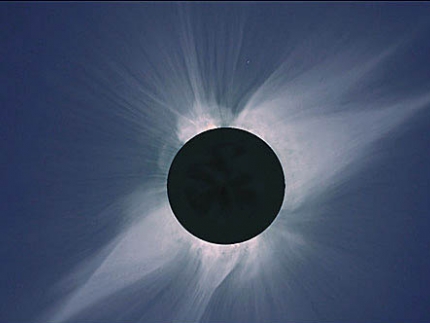
Total solar eclipse. The Sun’s cornea is only visible from Earth during a solar eclipse. Source: NASA

A solar eclipse occurs when the Moon is in between the Sun and the Earth. The Moon’s orbit is tilted around the Earth, so every new moon doesn’t produce an eclipse. Totality (when the Moon completely covers the Sun) will occur at 19:22:57 UTC.

June 3rd: New Moon

New month, new moon! New moon is the first phase of the Moon. When the Moon is in its new moon phase, it can’t be seen very well. In addition, we will experience a spring tide, meaning the high tides will be extra high, while the low tides are extra low. The Moon will be near the Sun in the constellation Taurus.

June 10th: First Quarter and Jupiter Closest Approach

First Quarter is when the right half of the Moon is lit up, while the left side is shrouded in darkness. The Moon will be on the western edge of Virgo. First Quarter also brings a neap tide. A neap tide is when the difference between the high and low tides is at a minimum.

Also on June 10th, Jupiter will be as close to Earth as it gets for a while. It will appear bigger and brighter! Furthermore, Jupiter will be directly opposite the Sun. Jupiter will be in between Scorpius and Sagittarius in the eastern sky.

June 16th: Moon and Jupiter Together

On June 16th, a nearly-full Moon and Jupiter will be together in the sky. They will be in between Scorpius and Sagittarius in the eastern sky.

June 17th: Full Moon

The full moon will be right above Sagittarius in the east. A full moon is when the side of the Moon facing us is totally lit by the Sun. The June full moon is known as the Strawberry Moon. They call it the that because June is the start of strawberry season. There will be another spring tide.

June 18th: Moon and Saturn Together

If you look to Sagittarius in the east on June 18th, you will see the Moon and Saturn together in the sky. Saturn will be directly above the bright moon, so it may be difficult to spot.

June 21st: Summer Solstice

June 21st is the Summer Solstice! The summer solstice is the longest day of the year in the Northern Hemisphere, and the shortest in the Southern. This is due to the axial tilt of the Earth.

June 23rd: Moon at Apogee

On June 23rd, the Moon will be at apogee. Apogee is when the moon is farthest from the Earth. The Moon’s orbit is elliptical enough to create a noticeable difference between apogee and perigee (when it’s closest to the Earth). You can see the tiny moon if you look to Aquarius.

Source: Muzamir Mazlan at Telok Kemang Observatory, Port Dickson, Malaysia.

June 25th: Last Quarter

The moon will be in last quarter on June 25th. The last quarter is when the left side of the moon is lit, while the right is completely dark. The last quarter will be in the constellation Pisces. There will be another neap tide.


Opinion: My Relationship with Physics

News, Uncategorized

I have always loved science. As a child, I looked at the stars and saw my future. I dreamed of finally being able to learn about real astronomy in school. I dreamed of being able to take physics. I figured everyone knows astronomy research these days is mostly physics, so as soon as I can start learning physics, I’ll be on my way to being a scientist. I thought I would be the best physics student my high school had ever seen and I would know for sure that physics was my future.  

Instead, I failed a test for the first time in my life. I was heartbroken. I was too dumb for physics. I wouldn’t be a famous scientist. My dreams were over.

Physics was the first class to ever challenge me. I knew, in theory, what you were supposed to do. You ask the teacher for help. Except, I couldn’t do that. I couldn’t bring myself to admit that I couldn’t do physics on my own. I wanted to be perfect at it right away.

Time passed. I became used to physics. I got better. I moved back to being the top of the class, and I considered myself good at physics. However, I still struggled. I struggled to ask for help. I sat next to a boy who was very smart. I thought if I asked him for help he would think I was stupid. I thought it would mean I was stupid.

I did improve, to be fair. I had an amazing physics teacher who welcomed questions. She never made me feel stupid for asking. I could trust her. She made me feel like I would be successful. She encouraged me more than anyone else.

To be honest, physics boys scared me. I didn’t want to be seen as some stupid girl who didn’t know anything. Once, during a project, I disagreed with a boy who everyone saw as very smart. I felt like he wasn’t listening to me because he knew he was smarter than me. Maybe because I’m a girl. But maybe just because that’s how he was. I was right about our disagreement. I felt so frustrated that I had been ignored, that I didn’t push hard enough, that I had fallen silent.

I am not perfect at physics. And I am not some physics prodigy. I’m okay with that.

But I’m still scared of physics boys. I’m scared that because I’m not perfect, they’ll see me as some stupid girl. They’ll think I don’t know what I’m doing. They won’t respect me or anything I say.

I’m in college now. I’m studying astronomy and physics. It’s what I always wanted to do. So far, I don’t enjoy it.

I took honors physics courses both the fall and spring of my freshman year. They were interesting, we had plenty of opportunities to ask questions, and my professors seemed to want us to succeed. But my class was overrun by boys. The second semester there were only 5 girls in my class. I estimate 20 boys made up the rest of the class. The boys controlled the class. A kid in the front row was constantly slowing down progress by asking fringe questions. Another, sort of a friend, shushed me. Others didn’t really listen to me. I felt like they were constantly telling me I was wrong without even stopping to listen to what I was saying.

I felt way in over my head. Everyone knew about scientists and concepts and theories I had never even heard of. These boys exuded confidence, sometimes without anything to back it up. They spoke with big words just to make themselves feel better.

I stopped studying with larger groups of the class. I only had two friends who I felt I could ask questions about physics. One of them told me that he was going to work on a difficult problem with other members of the class, and asked if I wanted to come along. I couldn’t. I couldn’t sit in front of those boys and tell them I didn’t know anything. I wanted to be successful and make friends, but these boys felt like poison.

I don’t know if these boys thought I was dumb because I’m a girl, or just because of the way I am. I don’t know if they thought I was dumb at all. But I do know they think they’re smarter than me. Maybe they’re right. But maybe not.

Both of my professors were male. The first struggled to answer questions in a way the asker could ever understand. The other constantly spoke as if electricity and magnetism were obvious. I couldn’t ask questions in class. I couldn’t reveal that I didn’t know what was going on.

The only one who allowed me to be stupid was our TA. Even then, I could only reveal what I didn’t know at office hours, with no one else around. One time I cried to him after class. The math expected of us was out of line with the math requirements of the class. I was totally overwhelmed and felt like I would never be able to catch up. He eased my worries.

But at the exact same time, a kid from my class rambled behind me about how it wasn’t that hard and I shouldn’t be worried. I felt totally patronized. It’s not that I couldn’t do the math, it was that I didn’t know how. No one had ever taught me it before. Later, my friend confronted him about showing off in front of the class. This kid didn’t seem to understand what was wrong with his actions. He laughed it off. He didn’t care to take stock about how it made any other student in the class feel.

These boys didn’t think before they spoke, ever. Another student made a condescending comment about how not everyone in the class was on the same level mathematically. Shaikly (and with backup from my friends), I confronted him. I told him it sounded rude, to which he replied that he didn’t mean it that way. I told him that he should think before he speaks. I don’t know if that affected him at all.

Another boy in my class told me that the Astronomy and Physics degree was fake physics. He held an air of superiority because he was just a Physics major—no astronomy included. He also bragged because he was Pre-Med. I don’t know how someone decides that physics is the right major to get them to med school, but to each their own.  

In general, I feel like I have to prove myself to these boys. I need evidence that I am not stupid and that I deserve to be taken seriously. Meanwhile, none of these boys have a single problem with each other. They are easy to accept each other’s expertise. They are allowed to make mistakes. I am not.

Even when I write, I constantly feel the need to prove myself. I fact check every little thing. I find only the most credible sources. I can’t have anyone thinking that some stupid girl is sitting behind her computer sprouting nonsense.

This isn’t, of course, to say that all physics boys are bad. My best friend constantly tells me I’m not stupid, and he helps me with all my questions. Another reassured me when I cried on an elevator about a less than ideal test grade. Another once complimented a difficult calculation I had done.

Unfortunately, they’re not enough. I always have to be on guard. I can never show weakness. What if this new boy isn’t one of the good ones? How can I know before it’s too late? The boys outnumber me. Who will be on my side?

I don’t enjoy physics like I used to. I still love astronomy. My wonderful (female) astronomy professor made me hopeful again. I might change my major to just Astronomy. I would have to take fewer physics classes, and I would have the opportunity to explore writing.

But what would these boys say? What would they think of me? I’m afraid they’ll think it’s a cop-out. That I couldn’t handle physics. That I’m stupid.

I know it doesn’t matter what they think. I’ll pick what’s best for me.

I’ll never be free from the fear they’ve instilled within me and how it affected my life. However, I don’t want them to be free to continue this behavior.

There is a constant debate about girls in STEM. Why don’t more girls choose STEM fields? This is why. They’re asked to prove themselves to their peers while their male counterparts sit by, out of the spotlight. It’s exhausting. And I can’t do it. It’s spoiled my relationship with science. STEM has lost me.

I still love astronomy. I still love looking at the stars. Maybe something will change, and I’ll go back to wanting to do research. For now, I’ll stay out of the spotlight. But I won’t stop looking at the stars.