Sustainable Swaps Part One: Beauty and Personal Care

earth, environment

In 2020, it should be easier to shop eco-friendly. Despite the growing number of consumers looking for sustainable brands, many remain out of reach price-wise. Luckily, there are still some brands that make eco-friendly swaps wallet-friendly. 

That being said, the most sustainable product is one you already own. You should always finish everything you have before buying anything new. Once you’re totally out of something and ready to make a sustainable swap, look here for some guidance! Obviously, this is far from a complete list. These are brands I know of and like.

This is part one of sustainable swaps: beauty and personal care. Part two will be household items. 

Makeup

Elate

This is the makeup brand I use! They are vegan and cruelty-free. In addition, face powder, eye shadow, and blush come in little tins that can be placed inside a bamboo palette, which drastically decreases waste. They also have a “perfectly imperfect” line, where you can purchase makeup with minor defects for a reduced price. They are, however, more expensive and shipping isn’t free. You can check their website to see if they are available near you, but otherwise, their products can be purchased online.

  • Mascara: $28
  • Foundation: $32
  • Lipstick: $22

ELF

ELF is one of the cheapest drugstore makeup brands and they still manage to do good for the environment. According to EthicalElephant.com, they are vegan and cruelty-free. ELF is found at most drugstores including Target.

  • Mascara: $3-$6
  • Foundation: $6-$8
  • Lipstick: $3-$6

Pacifica

Pacifica is 100% vegan and cruelty-free, according to their website. They also have a recycling program for their products!

  • Mascara: $14-$16
  • Foundation: $16
  • Lipstick: $10

Skin Care

Acure

Acure is a skincare brand that also sells some hair and body products. They are 100% vegan and cruelty-free. 

  • Face wash: $10
  • Moisturizer: $17-$20

Soap bars

Bars are generally considered to be more eco-friendly than bottled products. Without the plastic bottles, they require less packaging and therefore less waste. They can be found at Earth Hero, the Package Free Shop, Target, and elsewhere.

Thayers

Thayers is an all-natural skincare brand. They are vegan (except for Slip Balms), gluten-free, and cruelty-free. I use this facial mist to keep my skin clear! This brand is found at Target and similar retailers. 

Perfume

by / rosie jane

by / rosie jane is a perfume company based out of California. All of their perfume is hand-mixed and comes in 100% recyclable packaging. They are cruelty-free, boasting a Leaping Bunny certification, and their perfumes are vegan. by / rosie jane can be found in Sephora and online. I wear their scent called Leila Lou!

  • Perfume Spray: $65
  • Rollerball: $40
  • Sample collection: $20

Skylar

Skylar is a natural perfume brand, which is vegan and never tests on animals. Many, but not all, of their packaging is recyclable. Skylar perfume can be found in select Sephora stores in the US and Canada and online. 

  • Perfume Spray: $78
  • Rollerball: $29
  • Sample collection: $25

Tools

Ecotools

Ecotools is an Earth and wallet-friendly brand. They can be found in most drugstores and Target. Their products are vegan, cruelty-free, and come in biodegradable packaging. They use recycled materials in their products. 

  • Starter set: $10
  • Single brushes: less than $10

Elate

Elate’s brushes are made of sustainable bamboo and vegan fibers. 

  • Set: $85-$105
  • Single brushes: $12-$24

Nail polish

Sally Hansen

Sally Hansen’s Good. Kind. Pure™ line is plant-based, and the entire company does not test on animals. This line comes in 30 different shades and a vegan top-coat. These polishes can be found at drug stores and Target. One bottle is $10

Removal

One eco-friendly way to remove makeup is to swap cotton rounds for something reusable. You can use a washcloth, buy reusable makeup rounds, or make your own!

I use coconut oil for makeup removal—everything just melts off your face! You only need a pea-sized amount for eye makeup and only a little more for the full face. Otherwise, any liquid makeup remover will work.

Deodorant

Natural Deodorants

There are plenty of natural deodorants on the market—Native is one of the most popular ones. However, these often come at over $10 more than the general options. If you can afford it, great! If not, there are other options.

DIY

One way to ensure your deodorant is eco-friendly is to make your own! Here is a deodorant recipe. If you don’t like this one, you can google other options. 

Shampoo/Conditioner

Renpure

This is shampoo and conditioner I use. All their products (except for the Biotin & Collagen line and Keratin & Argan) are vegan. They don’t test on animals, but they are not certified cruelty-free. Their products can be found at Target, some drugstores, and some grocery stores.  Shampoo and Conditioner at $8 each.

Bars

Because they aren’t liquids, they don’t need plastic packaging. At Earth Hero and the Package Free Shop, there are plenty of options for shampoo and conditioner bars. Some options can also be found at Target.

Body Wash

Renpure

I use their body wash as well! Their products can be found at Target, some drugstores, and some grocery stores. Their body washes lather well (and last longer!) with a loofah. Body washes are $8 each.

Bars

Again, bars (usually) require less packaging. Body bars are available almost anywhere other body soaps are found. 

Loofah

The most sustainable option is to not buy anything! However, some soaps last longer with a loofah, so it may be worth in the long run. Keep in mind that loofahs usually need to be replaced once a month to prevent bacteria and mold. 

Washcloths

One option is to use washcloths you already own! These are obviously reusable and should last you a long time.

Natural loofah

Natural loofahs are another option. They can be found at some drugstores—do your research to find one. This natural loofah from the Package Free Shop is compostable. 

Silicone scrubber

Silicone scrubbers can be found near loofahs at stores. 

Lotion

Acure

Acure is back because they also have a lotion! Their lotion is $12 and can be found at Target.

Ethique

This is another great brand! Ethique lotions come in blocks— which we already know the benefits of. Ethique is cruelty-free, plastic-free, vegan, sustainable, and palm oil-free. Their lotion is $13 and can be found at Target. 

Toothbrush

Bamboo toothbrushes are a new way to be sustainable. They can be found at Amazon, Rite Aid, and other retailers. When using a bamboo toothbrush, be sure to read the end-of-life instructions. There is a good chance the bristles need to be removed before composting the handle.

Razors

Safety razors

Safety razors are replacing disposable ones in the sustainable community. The handle is supposed to last a lifetime, and the blades are recyclable (although not in every municipality, so check!) 

Albatross is one brand that sells safety razors and blades. Their razors are $25 at the cheapest, and the blades $2.50 for 10. They also have a blade take-back program. 

Leaf is another brand that sells metal razors. One razor and 20 blades runs for $79.

This safety razor is only $17 on Amazon. 

Blades can also be bought on Amazon, and newcomers to the safety razor world can purchase sample packs to try different blades out. 

Razor banks are one way to dispose of razor blades after they’ve been used. This razor bank claims to hold 300 blades! Then, the whole thing can be safely recycled.  

The Good Trade published a resource for safety razor beginners

Flamingo

If you’re not quite ready for the safety razor game, there is an alternative. Flamingo is like a traditional disposable razor, but you reuse the handle and change the cartridge at the top. The handle is $10, and the cartridge replacements run for $16 for 4. Flamingo can be found at Target.

Menstrual Products

Sustainable period products can be…complicated. There are limited options, and they are very dependent on personal preferences. Don’t feel bad if you can’t make these swaps. Periods don’t make it easy.

Period Underwear

The first option is reusable period underwear. These are basically thick underwear that absorb your period. After use, they can be washed in the washing machine. One popular brand is Thinx.

Reusable Pads

These are strips of fabric that button to stay in place. I’ve heard that they don’t stay as well as the disposable kind. Here is one option for reusable pads from Earth Hero.

Menstrual Cups

This may be one of the more well-known sustainable options. Like tampons, menstrual cups sit inside the body. These are also reusable, so you don’t have to spend money on pads or tampons anymore! Here is a resource detailing everything a beginner needs to know about menstrual cups.

Clothes

The most sustainable way to shop for clothes is to buy secondhand. This could be at your local thrift shop, Goodwill, or at Thredup, an online consignment shop. 


Other Resources


Related Posts

Easy Ways to be Eco-Friendly

In today’s society, everyone is looking for ways to be more environmentally friendly. Unfortunately, it’s not easy. Nearly every company uses plastic in their products and those that don’t often sell for exorbitant prices. So what can we, the average consumer, do to help the Earth? One easy way to help the Earth is to…

What’s the Deal with Palm Oil?

It can be difficult to keep up with the best ways to be environmentally friendly. Recently, palm oil has been placed on the chopping block. However, the palm oil issue is not widely understood. This begs the question: is palm oil bad? Palm oil comes from the fruit of the oil palm tree, known as…

Who is Killing the Earth?

It is an indisputable fact that the Earth is getting warmer. Study after study after study has proven time and time again that temperatures are rising at an alarming rate. Glaciers are melting, sea levels are rising, and creatures everywhere are losing their homes to human growth. 97 percent of climate scientists agree that there…


Dyson Spheres: Smart or Stupid?

Astronomy and Physics, Earth, News

The other day my dad made a bold claim: Dyson spheres are stupid. I told him that they were not stupid, and he replied that they are because they’re physically impossible. 

I have to admit, he may have a point there. I mean, a true Dyson sphere would have to be quite large. That would take a lot of materials. Does the Earth have enough materials? Does the solar system? 

A Dyson sphere is a theoretical structure that encompasses a star. This structure would harvest as much sunlight as possible.

Olaf Stapledon made the first mention of Dyson spheres in his book Star Maker, but Freedman Dyson later proposed them in a scientific journal as a solution to an advanced civilization’s energy shortage. We rank hypothetical advanced civilizations on the Kardashev Scale, which is based on energy consumption. Currently, humans are not advanced enough to show up on the scale. However, a civilization with a Dyson sphere would be a Type II civilization—they would be able to harness the energy of their star. 

The sun is constantly producing 386 septillion watts of energy. Less than a billionth of a percent of this energy reaches the Earth. Humans harvest even less than this. Clearly, there is a ton of missed solar energy. 

But how would a Dyson sphere actually work? If it were to encompass the sun, but not the Earth, we would no longer receive sunlight. That wouldn’t work; it’s common knowledge that we need sunlight for life. So maybe it should follow the Earth’s orbit, with a little gap for the Earth. Or maybe it should be a little bigger than the Earth’s orbit and hold us inside too. Either way, that would be an astronomically large structure. The Earth is 93 million miles from the sun, so a sphere of that size would have a surface area of 109 quadrillion miles squared. My dad is right, that would be (nearly) impossible. There are not enough materials on the Earth. Luckily, there are enough materials in the solar system to build one. However, I wouldn’t count on it. 

An artist’s concept of a Dyson sphere. Source: CapnHack, via energyphysics.wikispaces.com

Okay, so we can’t have a Dyson sphere. But maybe we can have a Dyson part of a sphere? Or a Dyson fleet of satellites? Some (my dad), may argue that this is not a true Dyson sphere, but we could harvest far more energy than we do now. Right now, humans can only dream of a Dyson sphere. We don’t have the technology to build such a thing. Even a simpler version would be way out of our league. An array of satellites would need carefully calculated orbits. However, some of these orbits would probably overlap, thus blocking the very light they were sent to collect. 

While a Dyson sphere would be really cool, we don’t need to go to space to harvest light for energy. I mean, we have plenty of working solar panels on Earth. Plus, they’re becoming more popular; solar energy has been increasing for years and continues to do so. While solar energy isn’t as efficient at producing energy as fossil fuels are, you don’t have to pay for sunlight. 

Maybe Dyson spheres are in our future—not our near future, of course. I, for one, don’t have a lot of hope. I think they’re a cool theoretical structure, but I believe they will remain exactly that: theoretical. I would also like to say that my dad is not right. Dyson spheres are not dumb. We just have to be smart enough to build them.


July Sky Spotlight

Astronomy and Physics, Earth, News

2nd – New Moon, Total Solar Eclipse

July will start off as strong as June did! On only the second day of the month, we will have a total solar eclipse. Most of South America will be able to see at least a partial eclipse. Check Time and Date to see if you’re in the path!

3rd – Moon with Mars and Mercury

Astronomers call the sliver after a new moon a young moon. July’s young moon will be hanging out with Mars and Mercury in the constellation Cancer.

4th – Earth at Aphelion

The Earth’s orbit around the Sun is not a perfect circle, it’s an ellipse. This means that at some point, it must be at it’s furthest point from the Sun. That is in July! Aphelion is when a planet is farthest from it’s sun. This won’t affect our life at all, it’s just a neat fact.

9th – First Quarter, Saturn at Opposition

On July 9th, the Moon will be in it’s first quarter phase. This means that the left half will be dark and the right half will be light.

In addition, Saturn will be at opposition. This means that Earth will be directly between Saturn and the Sun.

13th – Moon with Jupiter

Jupiter and the Moon will be together in the constellation Scorpius in the Southern sky.

15th – Moon with Saturn

Saturn will be just East of the nearly full moon. They will be together in the constellation Sagittarius in the Southern Sky.

16th – Full Moon, Partial Lunar Eclipse

Most of the world (not including North America) will be able to see the Partial Lunar Eclipse! Check Time and Date to see if you’re in the path. If, like me, you are not in the path, enjoy the bright, beautiful full moon.

20th – Moon with Neptune

The Moon will be with Neptune in the constellation Aquarius in the Eastern night sky.

24th – Last Quarter, Moon and Uranus

On the 24th, the Moon will be in it’s last quarter with Uranus. They will be in Aries.

28th – Southern Delta Aquariid Meteor Shower Peaks

From midnight to dawn, and especially at 2 a.m., we will be able to see meteors originating from Aquarius. The moon will be a dark crescent, so the meteors will be easier to see. It is more visible from the Southern hemisphere than from the Northern Hemisphere.

31st – New Moon

Finally, on the last day of the month, we will end the same way we began: with a new moon.

Happy July viewing!


Easy Ways to be Eco-Friendly

environment, News

In today’s society, everyone is looking for ways to be more environmentally friendly. Unfortunately, it’s not easy. Nearly every company uses plastic in their products and those that don’t often sell for exorbitant prices. So what can we, the average consumer, do to help the Earth?

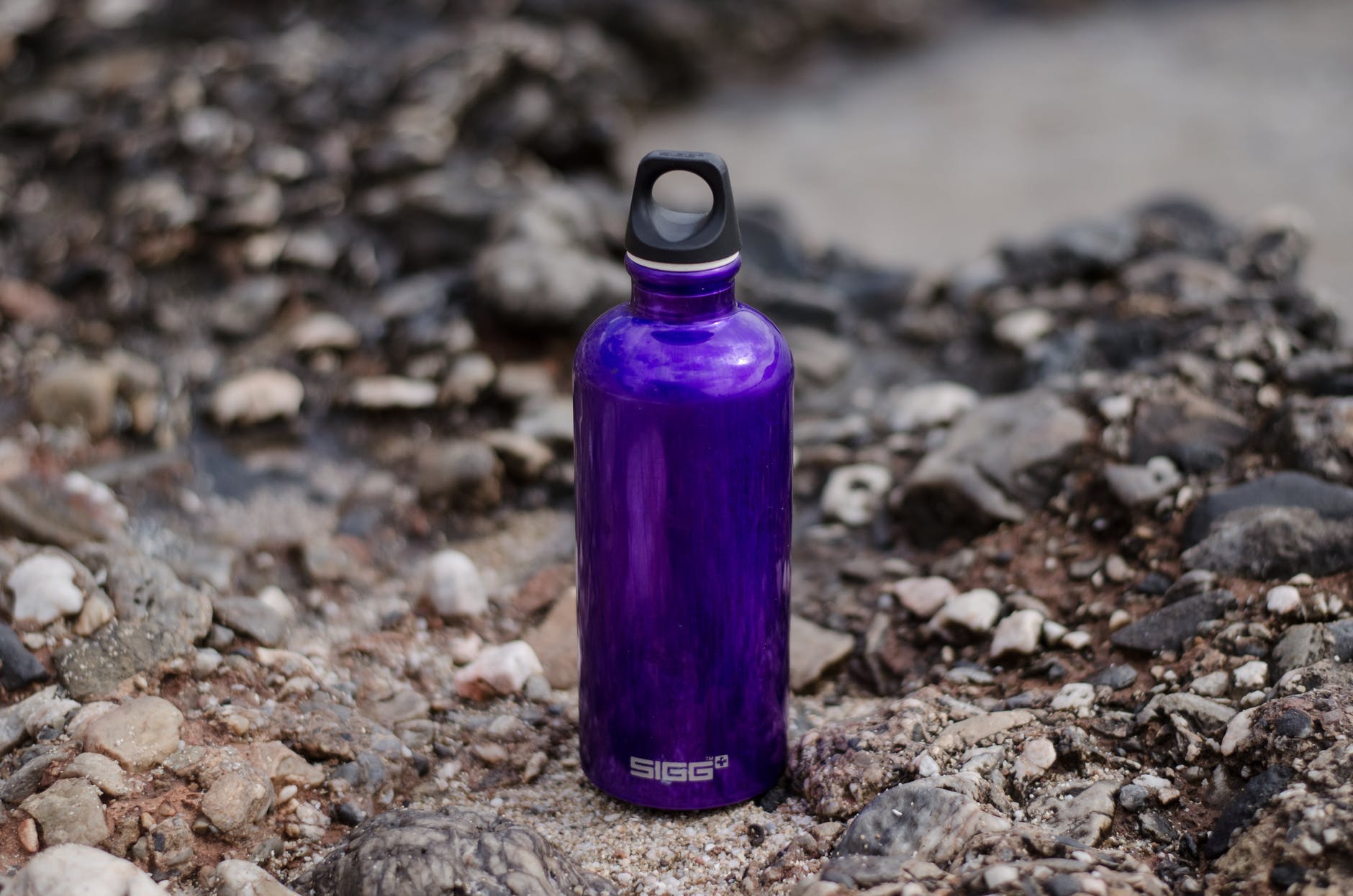
One easy way to help the Earth is to reduce your use of single-use plastics. Water bottles, Ziploc bags, and to-go cups are very convenient in our lives. We use them so often without even batting an eye. An easy place to start is looking for ways to cut these out. I carry around a reusable water bottle. There are tons of these out there, and they can fit almost any need. Some are filtered, some have places for fruit to be diffused into the water, and some have re-freezable ice sticks in the middle. They come in different sizes and at many different price points, so it should be easy to find one to fit your needs. 

Another simple thing I do to help the Earth is put my lunch in Tupperware. Instead of putting my sandwich in Ziploc bags, I use sandwich sized containers. These are washable, reusable, and easily reduce plastic. A set of these containers can be cheaper than Ziploc bags, and they will last you infinitely longer. 

These photos come from the public domain. Found on Pexels.

Furthermore, if you drink coffee, use a travel mug. You can make your coffee at home, or have them filled up at a coffee shop. At Starbucks, you get a 10 cent discount if you bring your own cup, and at my university, a refill (on any cup size) only costs 99 cents. These discounts will add up over time. Starbucks produces 6 billion plastic cups every year. By using travel mugs, a  single person can help lower that number. 

There are lots of other single-use products that can be replaced with a reusable counterpart. We can use wool dryer balls instead of dryer sheets (I use these). We can use reusable makeup pads instead of cotton pads (I use these). These pads work better for me than cotton pads and eye makeup remover did. Furthermore, companies make reusable food storage bags (like these) and reusable wax food wraps (like these). 

Admittedly, products like these require an investment at the beginning, but long term they should save you money. Dryer balls claim to last for 1,000 loads, and they cost about the same as 200 dryer sheets. You don’t have to be a mathematician to see those savings. 

Another important way to help the environment is to recycle. Unfortunately, recycling is not as easy as it seems. There are lots of rules, and not every person lives where it’s convenient to recycle. Luckily, there are many resources online that can help you out, such as EcoScraps. However, one thing that many do not realize is that putting a non-recyclable into a recycling bin can be devastating. Such products could contaminate the whole bin, forcing everything back into a landfill. Even if they don’t contaminate, they slow down the recycling process. If you don’t know if something can be recycled, look it up! 

If you don’t have curbside recycling, research where you can drop off recycling. There may be a nearby, convenient place for you to drop it off. 

You may not be an eco-friendly genius, but it’s good enough to try your best. Simple actions like the ones above help the environment. Don’t beat yourself up if you’re not perfect. Trying is exactly where you need to start.


June Sky Spotlight

Astronomy and Physics, Earth, News

June is finally here! There’s a lot of exciting sights in the sky this month. Unfortunately, Mars and Venus will not be in their best viewing location; both planets rise in the morning and set in the afternoon and evening. Luckily, however, Jupiter and Saturn will be quite visible! These planets will rise in the evening and set in the morning.

June 2nd: Solar Eclipse

On June 2nd, there will be a solar eclipse that will be able to be seen from parts of the Southern Hemisphere! You can search Time and Date’s path map to see if you’ll be able to view it!

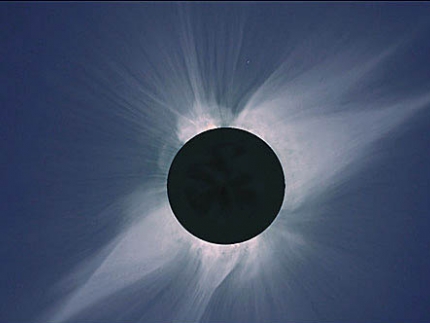
Total solar eclipse. The Sun’s cornea is only visible from Earth during a solar eclipse. Source: NASA

A solar eclipse occurs when the Moon is in between the Sun and the Earth. The Moon’s orbit is tilted around the Earth, so every new moon doesn’t produce an eclipse. Totality (when the Moon completely covers the Sun) will occur at 19:22:57 UTC.

June 3rd: New Moon

New month, new moon! New moon is the first phase of the Moon. When the Moon is in its new moon phase, it can’t be seen very well. In addition, we will experience a spring tide, meaning the high tides will be extra high, while the low tides are extra low. The Moon will be near the Sun in the constellation Taurus.

June 10th: First Quarter and Jupiter Closest Approach

First Quarter is when the right half of the Moon is lit up, while the left side is shrouded in darkness. The Moon will be on the western edge of Virgo. First Quarter also brings a neap tide. A neap tide is when the difference between the high and low tides is at a minimum.

Also on June 10th, Jupiter will be as close to Earth as it gets for a while. It will appear bigger and brighter! Furthermore, Jupiter will be directly opposite the Sun. Jupiter will be in between Scorpius and Sagittarius in the eastern sky.

June 16th: Moon and Jupiter Together

On June 16th, a nearly-full Moon and Jupiter will be together in the sky. They will be in between Scorpius and Sagittarius in the eastern sky.

June 17th: Full Moon

The full moon will be right above Sagittarius in the east. A full moon is when the side of the Moon facing us is totally lit by the Sun. The June full moon is known as the Strawberry Moon. They call it the that because June is the start of strawberry season. There will be another spring tide.

June 18th: Moon and Saturn Together

If you look to Sagittarius in the east on June 18th, you will see the Moon and Saturn together in the sky. Saturn will be directly above the bright moon, so it may be difficult to spot.

June 21st: Summer Solstice

June 21st is the Summer Solstice! The summer solstice is the longest day of the year in the Northern Hemisphere, and the shortest in the Southern. This is due to the axial tilt of the Earth.

June 23rd: Moon at Apogee

On June 23rd, the Moon will be at apogee. Apogee is when the moon is farthest from the Earth. The Moon’s orbit is elliptical enough to create a noticeable difference between apogee and perigee (when it’s closest to the Earth). You can see the tiny moon if you look to Aquarius.

Source: Muzamir Mazlan at Telok Kemang Observatory, Port Dickson, Malaysia.

June 25th: Last Quarter

The moon will be in last quarter on June 25th. The last quarter is when the left side of the moon is lit, while the right is completely dark. The last quarter will be in the constellation Pisces. There will be another neap tide.


Who is Killing the Earth?

environment, News

It is an indisputable fact that the Earth is getting warmer. Study after study after study has proven time and time again that temperatures are rising at an alarming rate. Glaciers are melting, sea levels are rising, and creatures everywhere are losing their homes to human growth. 97 percent of climate scientists agree that there is a problem. We cannot ignore this any longer.

Every day we see articles giving advice on how you, the average citizen, can stop global warming. If we all do our part, they claim, it will make a huge difference.

It’s time to stop pretending that the average citizen is to blame for this record level pollution. Only 100 companies produce 71 percent of global greenhouse gas emissions, according to the 2017 Carbon Majors Report. Most of these companies are fossil fuels producers.

Starbucks has started to phase out straws, but the new straw-less lids use more plastic than the straws and old lids did. These lids are recyclable, which is an improvement, but only if they get recycled. Statistically speaking, they won’t be. Only 9.5 percent of plastic is recycled. Over 75 percent ends up in landfills. According to the New York Times, Memphis’ airport (which has three Starbucks) has recycling bins, but everything placed in them goes to the landfill with the trash. Furthermore, an ocean clean up project found that 65 percent of plastic products cleaned up were from Coca Cola, Pepsi, or Nestle.

We blame residents for not recycling when many areas don’t pick up recycling. According to a 2016 report from The Recycling Partnership, only 53 percent of the United States has automatic access to curbside recycling. Curbside recycling is when it gets picked up from your house, the way garbage does. Without curbside recycling, residents have to take their recycling to a facility, sometimes across town. Many people don’t want to put this kind of effort in.

Alternatively, residents may pay for a private collector to pick up their recyclables. However, this could cost anywhere from $5 to $25 a month. In addition, fees could be added if you have more than one bin. Some may not be able to afford this, while others simply don’t care enough to pay for such a service.  

The government must lead the way to save our planet. Many are trying. Nearly 200 counties signed the Paris Climate Agreement, an agreement to make plans to cut emissions. In 2017, President Donald Trump pulled the United States out, despite overwhelming nation-wide support for the agreement.

Source: Marlon, J.R., Fine, E., and Leiserowitz, A. (2017). A majority of Americans in every state say the U.S. should participate in the Paris Climate Agreement. Yale University. New Haven, CT: Yale Program on Climate Change Communication.

That being said, even in the countries that are still a part of the agreement, goals are not being met. Furthermore, an article posted in Nature claims that the goals set by member nations are not enough to save the planet. But the Paris agreement is not binding. Nothing is stopping any country from not doing its part.

We, as humans, have to make a change. I want to see a world that future generations can thrive in, and not one plagued by extreme weather, decreased biodiversity, and rising sea levels that consumes the land we live on. Rejecting science and ignoring evidence will kill the Earth if we’re not careful.

So please, be careful.


For more information, review the sources below.